
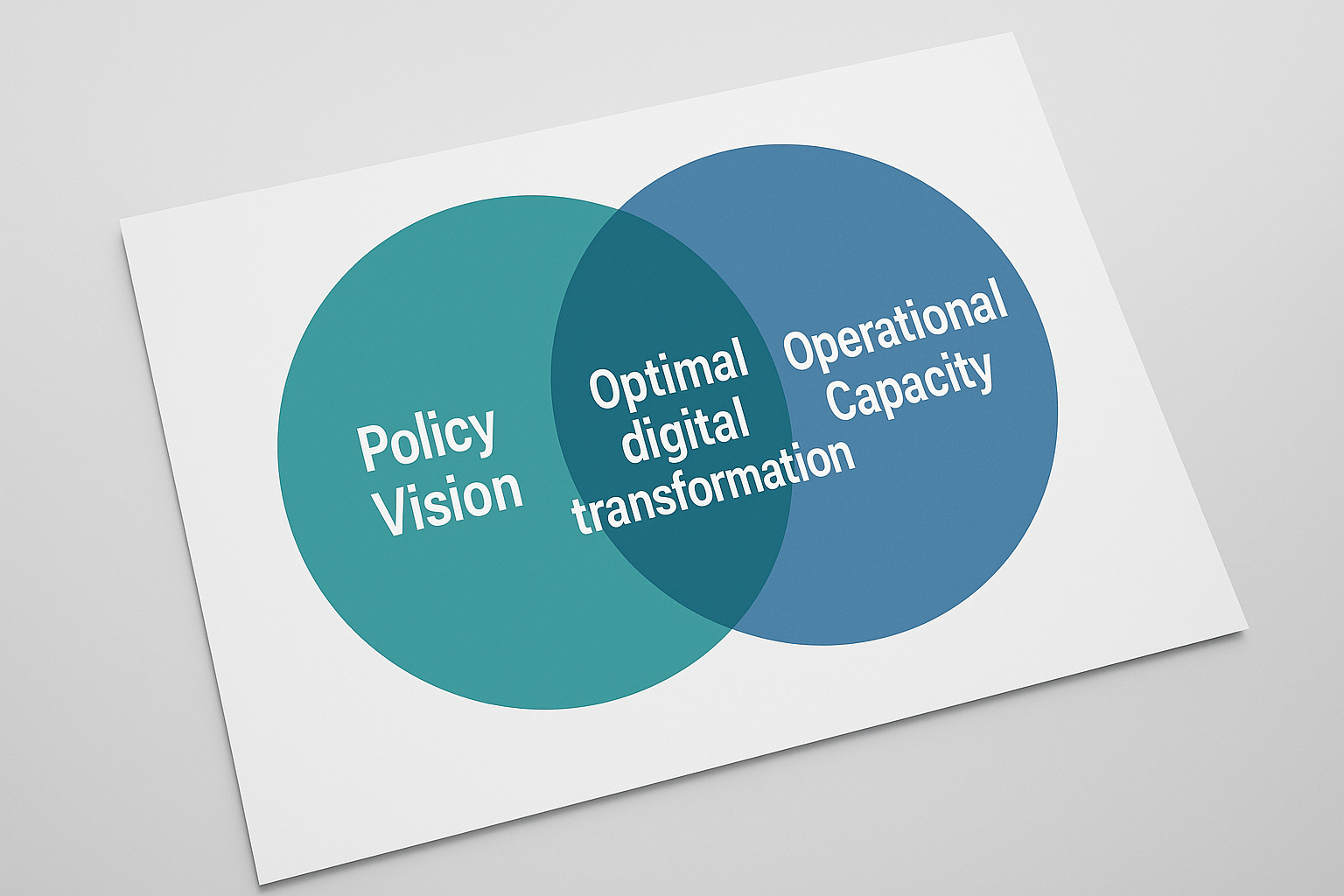
Digital Transformation as a Leadership Imperative
Digital transformation in government is not merely a technical upgrade; it is a strategic and cultural shift that affects every branch, process, and interaction with citizens. Ministers and Deputy Ministers (DMs) are responsible for anchoring this shift, ensuring that technology adoption aligns with political priorities, operational realities, and citizen expectations.
Ministers provide the political legitimacy and advocacy needed to secure Cabinet approval, funding, and public support. DMs translate that political direction into operationally feasible plans, balancing ambition with compliance, risk management, and departmental capacity. Together, they form a strategic-operational dyad crucial for successful transformation.
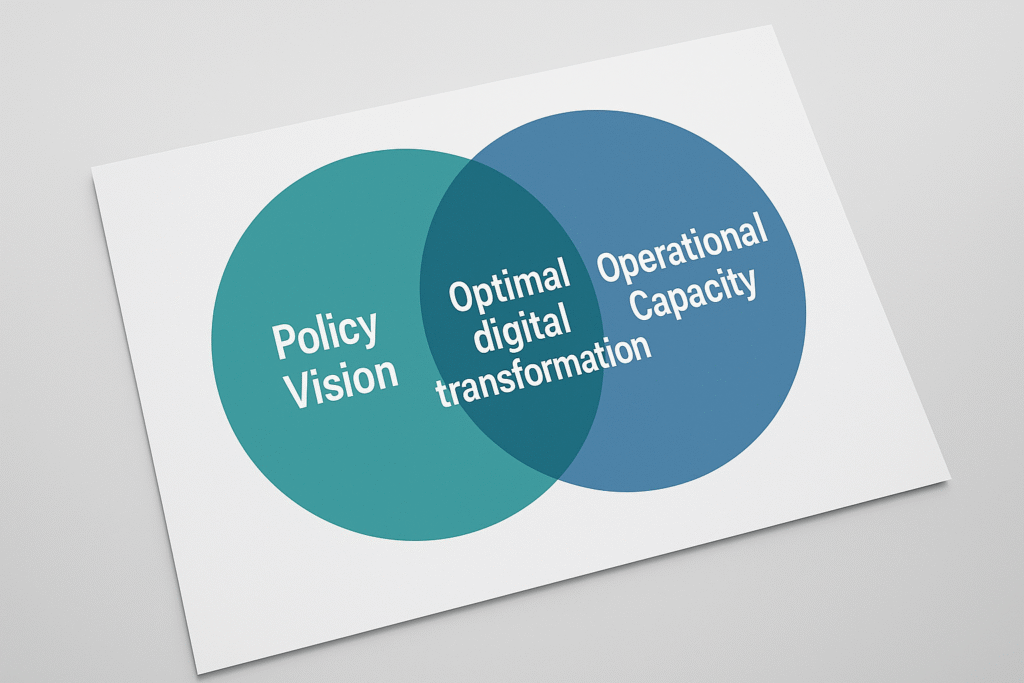
Without coordinated sponsorship at the apex, digital initiatives often suffer from inconsistent messaging, misaligned priorities, and stalled adoption across directorates. This blog examines how Ministers and DMs can lead digital government transformation effectively, ensuring alignment, sustainability, and measurable outcomes.
Sponsorship Roles at the Apex
Ministers: Political Champions of Digital Reform
- Vision Articulation: Ministers define digital government priorities in mandate letters, Cabinet memos, and public communications. Their framing shapes internal expectations and public perception.
- Stakeholder Engagement: Ministers engage Parliament, media, and citizens to create a supportive environment. They also negotiate with other Ministers whose portfolios may intersect with digital initiatives.
- Resource Advocacy: Ministers champion necessary investments in IT infrastructure, digital skills, and transformation offices, ensuring departments have the resources to deliver.
Deputy Ministers: Operational Stewards
- Implementation Strategy: DMs convert political vision into actionable operational plans with timelines, milestones, and performance indicators.
- Capacity Building: DMs coordinate across ADMs and DGs, ensuring directorates have the human and technical resources for adoption.
- Governance and Risk Management: They embed oversight structures, cybersecurity standards, and compliance protocols to reduce operational and reputational risk (Savoie, 2003).
By working in tandem, Ministers and DMs create both legitimacy and feasibility, a combination essential for lasting digital transformation.
Navigating the Paradox: Urgency vs. Sustainability
Ministers and DMs constantly balance competing imperatives:
- Immediate Results vs. Structural Change
Ministers must show progress to maintain political credibility. DMs must ensure changes are structurally sound and operationally sustainable. Quick wins—like an online application portal—provide early visibility but must be part of a broader, enduring digital strategy. - Innovation vs. Risk Management
Ministers often push for ambitious innovation to demonstrate leadership. DMs ensure that risk is managed through pilot programs, phased rollouts, and robust governance frameworks. - Centralization vs. Departmental Autonomy
Central digital priorities require alignment across branches, but departments may need flexibility to implement solutions tailored to local operational realities.
Successfully navigating these tensions requires continuous communication, visible leadership, and structured decision-making.
Challenges Unique to Ministers and DMs
- Electoral Turnover and Portfolio Reassignment
Ministers may be reassigned frequently; DMs provide continuity but may themselves rotate, creating knowledge gaps. This requires institutional memory and documentation to sustain reforms. - Political-Bureaucratic Tension
Ministers prioritize speed and impact; DMs prioritize feasibility and risk mitigation. Misalignment can result in stalled projects or unrealistic mandates (Bakvis & Jarvis, 2000). - Public Scrutiny and Media Pressure
Digital services are highly visible. Citizens expect reliability, security, and accessibility. Ministers and DMs must anticipate public reactions to outages, delays, or privacy issues. - Stakeholder Complexity
Reforms often intersect with provincial governments, Indigenous partners, and international obligations. Ministers negotiate politically, and DMs operationally coordinate compliance and collaboration. - Cultural Resistance
Departments with legacy structures may resist digital initiatives. Ministers and DMs must demonstrate commitment while fostering a culture of innovation and learning.
Best Practices for Ministers and DMs
- Align Messages Consistently
Ministers and DMs must present a unified vision to internal and external audiences. Misalignment can erode trust and undermine adoption. - Balance Quick Wins with Long-Term Objectives
Early deliverables provide political credibility, while long-term structural reforms ensure enduring impact. Examples include phased online service rollouts, pilot digital programs, and continuous evaluation mechanisms. - Institutionalize Digital Transformation
Embed initiatives in Cabinet committees, Treasury Board submissions, departmental strategies, and performance frameworks to ensure continuity and accountability (Lindquist & Eichbaum, 2016). - Model Commitment
Ministers’ public advocacy paired with DMs’ visible operational engagement signals seriousness. This modeling encourages mid-level managers and staff to embrace change. - Facilitate Cross-Departmental Collaboration
Ministers provide political cover; DMs coordinate operational mechanisms to break silos and align interdependent programs. - Invest in Leadership Below
Supporting ADMs and DGs ensures operational ownership, accountability, and culture change at the frontline.
Case Example: Transforming Citizen Services
A federal initiative to modernize digital services illustrates successful apex sponsorship:
- Ministerial Role: Articulated a “digital-first” vision, secured Cabinet approval, and communicated progress publicly.
- DM Role: Established a dedicated transformation office, aligned ADMs and DGs, and embedded metrics in departmental performance agreements.
- Operational Outcome: Increased online access, reduced processing times, and improved citizen satisfaction. This success stemmed from strong Minister-DM alignment and visible sponsorship.
Risks of Weak Minister-DM Sponsorship
- Fragmented Implementation: ADMs and DGs lack coherent direction, leading to inconsistent departmental adoption.
- Short-Termism: Initiatives become political talking points rather than sustainable programs.
- Staff Disengagement: Employees lose confidence when leadership appears inconsistent or absent.
- Missed Opportunities: Innovative solutions fail to scale without top-level support.
Empirical studies show that strong apex sponsorship is the most consistent predictor of successful government reform (Fernandez & Rainey, 2006).
Supporting Ministers and DMs
Organizations can strengthen apex sponsorship through:
- Structured Alignment Sessions: Regular meetings to ensure messaging and expectations are consistent.
- Dedicated Transformation Offices: Administrative support to coordinate and monitor initiatives.
- Peer Networks: Ministerial councils and DM forums to share lessons and reinforce governance standards.
- Performance Metrics: Link reform objectives to mandate letters, performance agreements, and key performance indicators.
Conclusion
Ministers and DMs anchor government digital transformation. Ministers provide legitimacy, advocacy, and resources; DMs provide operational grounding, continuity, and governance. Their alignment ensures reforms are feasible, sustainable, and meet citizen expectations.
Visible sponsorship, resource allocation, governance mechanisms, and leadership investment below the apex are all essential. Without this alignment, even technically sound reforms fail. With it, digital transformation delivers measurable outcomes, improves citizen experience, and strengthens departmental culture.
What’s Next?
Institute X partners with Ministers and DMs to provide independent guidance, governance design, and leadership development for successful digital transformation.
References:
- Bakvis, H., & Jarvis, M. (2000). From New Public Management to a New Political Governance. McGill-Queen’s University Press.
- Fernandez, S., & Rainey, H. G. (2006). Managing successful organizational change in the public sector. Public Administration Review, 66(2), 168–176.
- Kotter, J. P. (2012). Leading Change. Harvard Business Review Press.
- Lindquist, E., & Eichbaum, C. (2016). Institutions, Ideas and Leadership in Public Sector Reform. Edward Elgar.
- Savoie, D. J. (2003). Breaking the Bargain: Public Servants, Ministers, and Parliament. University of Toronto Press.